

Technical Engineer
James Carr

It is important to make sure your I.T Partner has a plan in place to keep devices fully compliant
When Windows 10 was launched and how long it’s been supported
Microsoft released Windows 10 to the public on **29 July 2015**. For nearly a decade, it has received regular feature, quality, and security updates. According to Microsoft’s lifecycle policy, the final update (version 22H2) will be supported until **14 October 2025**, after which security and quality patches will end for Home and Pro editions.
The arrival of Windows 11
Windows 11 began rolling out on **5 October 2021** as a free upgrade for eligible Windows 10 devices.
The operating system introduced stronger built-in security, a refreshed update cycle, and enhanced support for modern hardware. With annual feature updates and extended support timelines, Windows 11 better aligns with today’s hybrid work environments and increasing cyber threats.
Why staying on Windows 10 now becomes a security and compliance risk
Unpatched systems are a known target for cyber attackers exploiting newly discovered vulnerabilities or Zero-day attacks. Running unsupported software also increases compliance risks, as many frameworks such as GDPR and ISO 27001 require that systems remain supported and secure.
Microsoft warns that although users may continue running Windows 10, it will “no longer receive quality updates or security updates.” Businesses relying on unsupported systems could find themselves facing increased downtime or data breaches.
How Meta Eagle is tackling this for our clients
Meta Eagle has taken proactive steps to help clients prepare for the Windows 10 end-of-life transition.
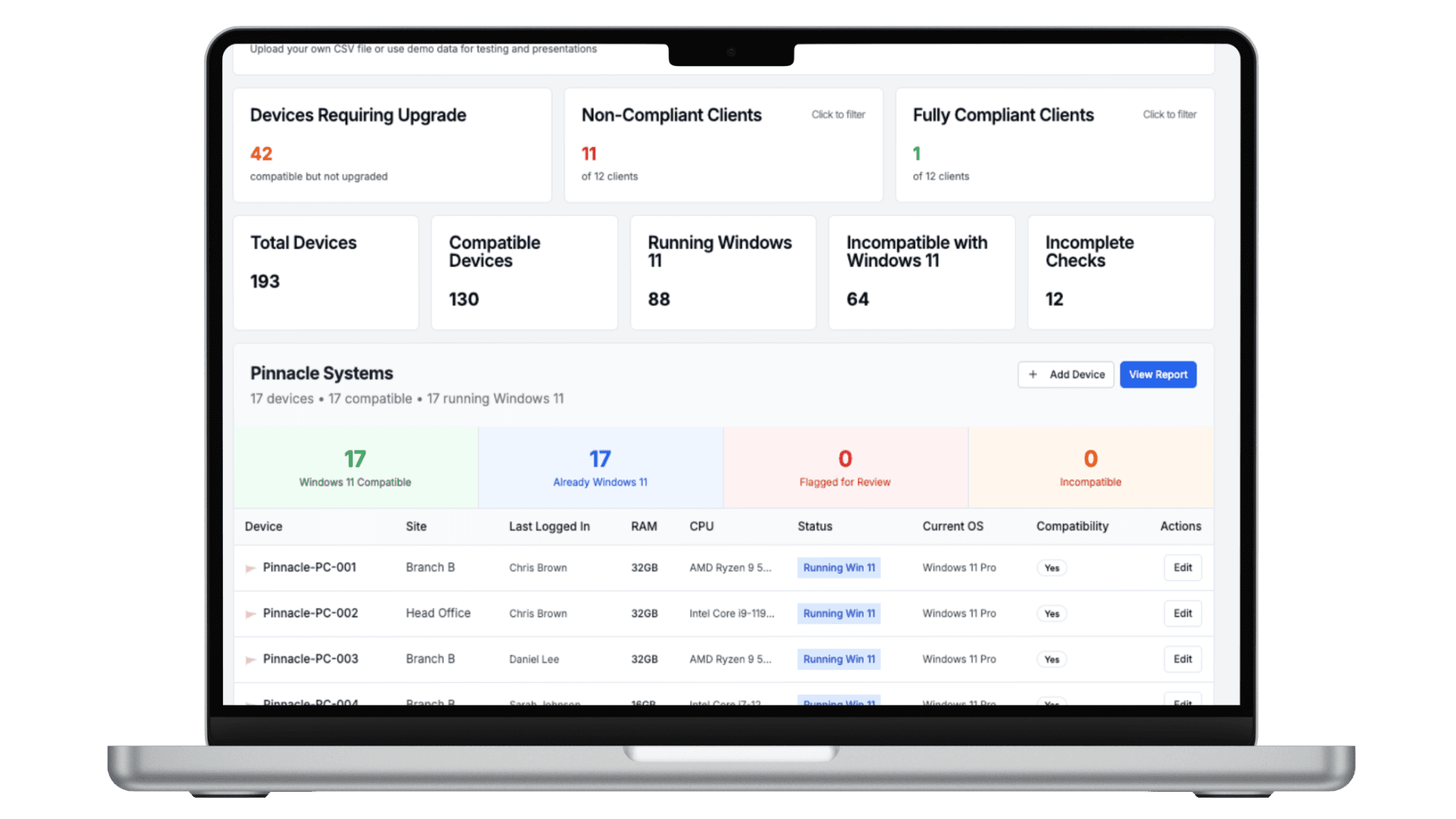
We’ve developed a custom application that collects real-time device data from each customer’s IT estate. The tool automatically categorises every endpoint to show:
- Devices already running Windows 11
- Devices eligible for upgrade
- Devices not eligible, requiring replacement or further review
Devices that we feel are not up to standard are also flagged, even if they are Windows 11 compliant. This includes devices running Windows 11 Home or have under 16 GB of RAM. Any device with a processor below an i5 are also flagged to ensure the customer has full awareness of each and every device, helping them with making informed decisions for their IT estate.
From there, we create **individual reports** for each customer and reach out to discuss tailored upgrade plans. These reports highlight the current status of all endpoints and provide clear recommendations for next actions.
Our technical team then works with each client to schedule upgrades and minimise downtime. Throughout the process, we ensure:
- Upgrades are completed securely and efficiently
- Endpoint protection and patch management continue uninterrupted
This approach gives every Meta Eagle customer a complete picture of their device health and ensures no machine is left exposed. Staying proactive not only strengthens cyber resilience but also helps maintain compliance and productivity as Windows 10 reaches its end.


