

Co-Founder & Director
Lee Robinson

AI innovation is accelerating — and it’s reshaping global hardware supply chains. Here’s why your IT equipment costs more, and what it means for your business.
Throughout late 2025 and into 2026, businesses across the UK have seen noticeable increases in the cost of IT hardware. From laptops and desktops to servers, memory upgrades and high-performance workstations, prices have risen across the board.
At Meta Eagle, as part of our managed IT services, we supply and maintain business-critical hardware for our customers. Naturally, many organisations are asking the same question:
Why is IT hardware getting more expensive?
The short answer: the global AI boom is driving unprecedented demand for high-performance components — particularly RAM and GPUs — and supply chains are struggling to keep pace.
The AI Infrastructure Gold Rush
Artificial Intelligence has shifted from experimental technology to mainstream enterprise infrastructure in record time. Large language models, AI-driven analytics platforms, automation systems and cloud-based AI services all rely on vast quantities of high-performance hardware.
At the heart of this infrastructure are:
GPUs (Graphics Processing Units) – critical for AI model training and inference
High-capacity RAM – essential for handling large datasets and AI workloads
Advanced data centre servers – built to support intensive processing demands
Major technology firms and hyperscale cloud providers are purchasing GPUs and memory modules in enormous volumes to build AI-capable data centres. This surge in demand has created supply bottlenecks globally.
When hyperscalers commit to buying entire production runs of advanced chips and memory, availability for the broader business market inevitably tightens.
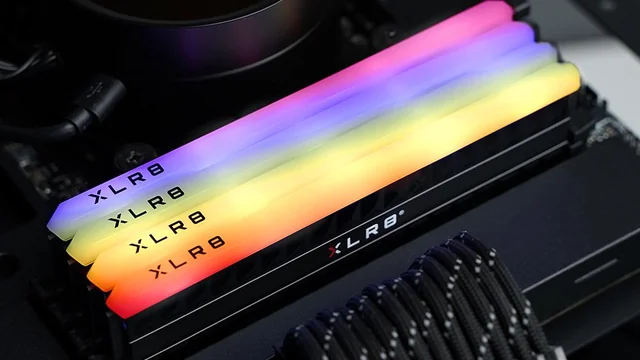
RAM Shortages and “Ramageddon”
Memory manufacturers have struggled to match the scale of AI-driven demand. As reported widely across the technology sector, RAM prices have risen sharply due to:
Increased AI server deployments
Limited fabrication capacity
Strategic production shifts towards higher-margin enterprise memory
Reduced inventory levels from previous market slowdowns
When supply tightens, pricing increases follow. Even standard business-grade memory modules are affected, as manufacturing lines prioritise AI-optimised components.
For SMEs and mid-sized organisations, this translates into higher costs for server upgrades, workstation builds, and even everyday business laptops.
GPU Demand and the Ripple Effect
GPUs have become the most sought-after component in modern computing. AI model training requires thousands of high-performance chips operating simultaneously. As a result:
GPU prices remain elevated
Lead times have extended
Secondary market pricing has surged.
Server hardware costs have increased.
Even businesses that do not use AI directly are impacted. Many server platforms now ship with AI-capable hardware configurations as standard, which raises baseline pricing.
In simple terms, AI demand has raised the “floor price” of performance hardware.
Wider Supply Chain and Economic Factors
Beyond AI demand, several additional factors are influencing hardware pricing:
Ongoing semiconductor fabrication constraints
Increased energy costs for manufacturing
Geopolitical trade pressures
Higher logistics and transport expenses
Together, these pressures compound the supply-demand imbalance. The result is a sustained period of elevated pricing rather than a short-term spike.
What This Means for Your Business
For organisations focused on IT security, GDPR compliance, and cyber risk prevention, hardware planning has never been more important.
Delaying hardware refresh cycles may seem cost-effective in the short term, but ageing infrastructure introduces:
Increased cybersecurity vulnerabilities
Reduced performance and productivity
Compliance risks
Higher failure rates and downtime
Strategic procurement and lifecycle planning are now essential components of managed IT services.
How Meta Eagle Supports You
As your managed IT partner, we take a proactive approach to hardware strategy:
Forward planning to avoid reactive purchasing at peak pricing
Lifecycle forecasting aligned with compliance requirements
Vendor diversification to mitigate supply risks
Infrastructure optimisation to maximise performance from existing assets
Cloud and hybrid strategies where appropriate
Our goal is not simply to supply hardware — it is to protect your business operations, support regulatory compliance, and reduce long-term cyber risk exposure.
Looking Ahead to 2026
Industry analysts expect AI-driven demand to remain strong through 2026. While some stabilisation may occur as production capacity increases, pricing is unlikely to return to pre-AI boom levels in the immediate future.
Businesses that plan strategically will be best positioned to control costs and maintain secure, compliant infrastructure.
Appendix
BBC News – Coverage on rising semiconductor and AI-driven chip demand
Tom’s Guide – “RAM prices are exploding: here’s why and everything you need to know about surviving ‘Ramageddon’”
Industry reports from major semiconductor manufacturers and market analysts (2025–2026 forecasts)


